
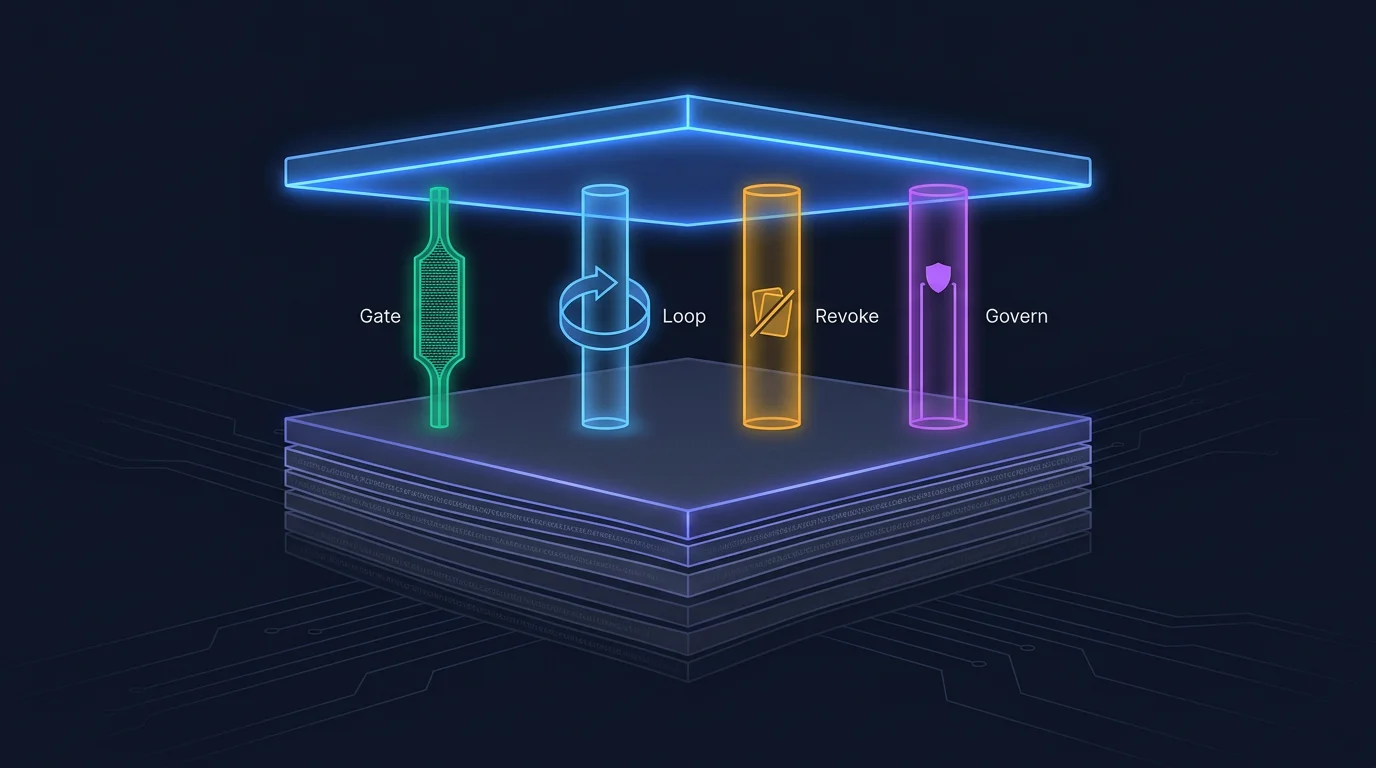
The gap between recording and remembering
An agent that ships software works a loop: read the project context, pick a task, implement, verify, record, commit, repeat. Most of that loop has been automated for a while. What has not is the part where the record comes back to inform the next task.
The difference between recording and remembering is a read path. A progress log that records what happened but is never consulted is an audit trail, not memory. The agent that fixed a timeout on task three and hits the same timeout on task fifteen has the history of its failure and no way to use it. It re-derives the lesson from scratch, in production, at the worst possible moment.
Most production agents have the first half of this. Very few have the second. The interesting design problem is not whether to add memory. It is how to add it without making the agent worse, because the evidence says that a naive memory layer can.
The five types
Agent memory is built from systems that cognitive science named. A production agent needs all four of them, plus a fifth that the literature treats as an afterthought.
| Working | The task at hand, the retrieved material, the reasoning in flight | The context window |
| Episodic | What happened: tool calls, failures, outcomes, decisions | The append-only archive |
| Semantic | What is known: the project, the stack, the domain | The repository and its instructions |
| Procedural | How to behave: rules, workflows, guardrails, lessons | The curated briefing |
| Prospective | What to watch for: conditions that might fail | The briefing's watch list |
Prospective memory is the least represented in the literature and the most useful in practice, because it converts memory from a record into a warning. An entry that says “this pattern failed before, do not repeat it” is procedural. An entry that says “this condition has not been tested yet, watch it” is prospective, and most memory designs leave no room for it.
The mapping matters less than the discipline it enforces. Each type has a different owner, a different lifetime, and a different failure mode, and mixing them into one bucket is how memory becomes noise.
Archive and briefing
The first design decision is the split. Everything the agent does goes into an archive: an append-only, line-by-line event log of episodes, each with a problem, an approach, an outcome, and the evidence. The archive is never read into context. It is the source material, the audit trail, and the history, and it is never edited in place because the moment the agent can rewrite its own history, the history stops explaining anything.
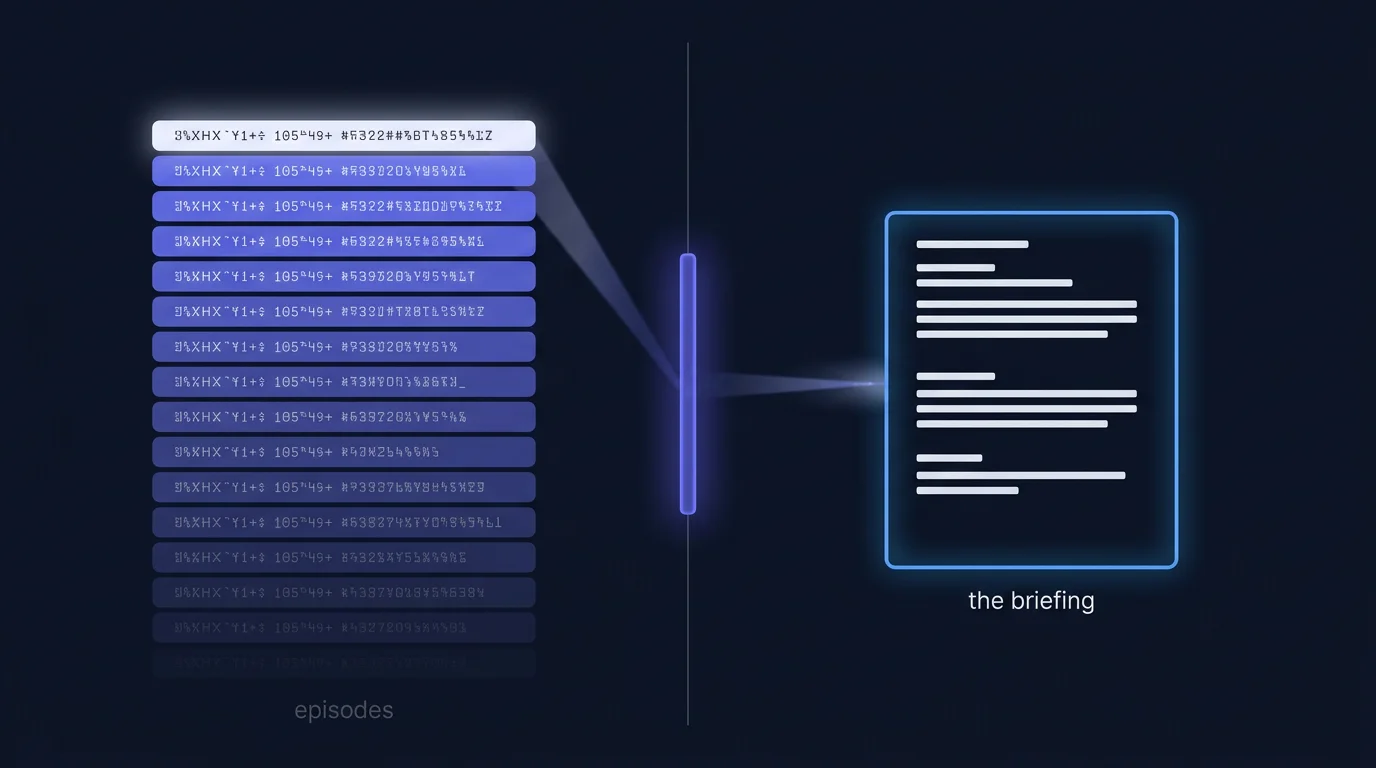 The archive stores everything. The briefing carries only what the task needs.
What enters context is the briefing: a curated set of insights distilled from the archive, filtered by the current task. The briefing is small, relevant, and current. The archive is everything, and most of it is noise from the model’s point of view.
This is the decision that separates working memory layers from harmful ones. The research is blunt about it. Adding cross-task episodic memory to a software engineering agent produced no configuration that outperformed the agent without memory, and the authors traced the degradation to the noise introduced by distracting memory items. The study, From Knowledge to Noise, is worth reading in full. The failure was not memory itself. It was uncurated memory.
The learning loop
Memory earns its name when it loops. The cycle in our layer runs on every completed task.
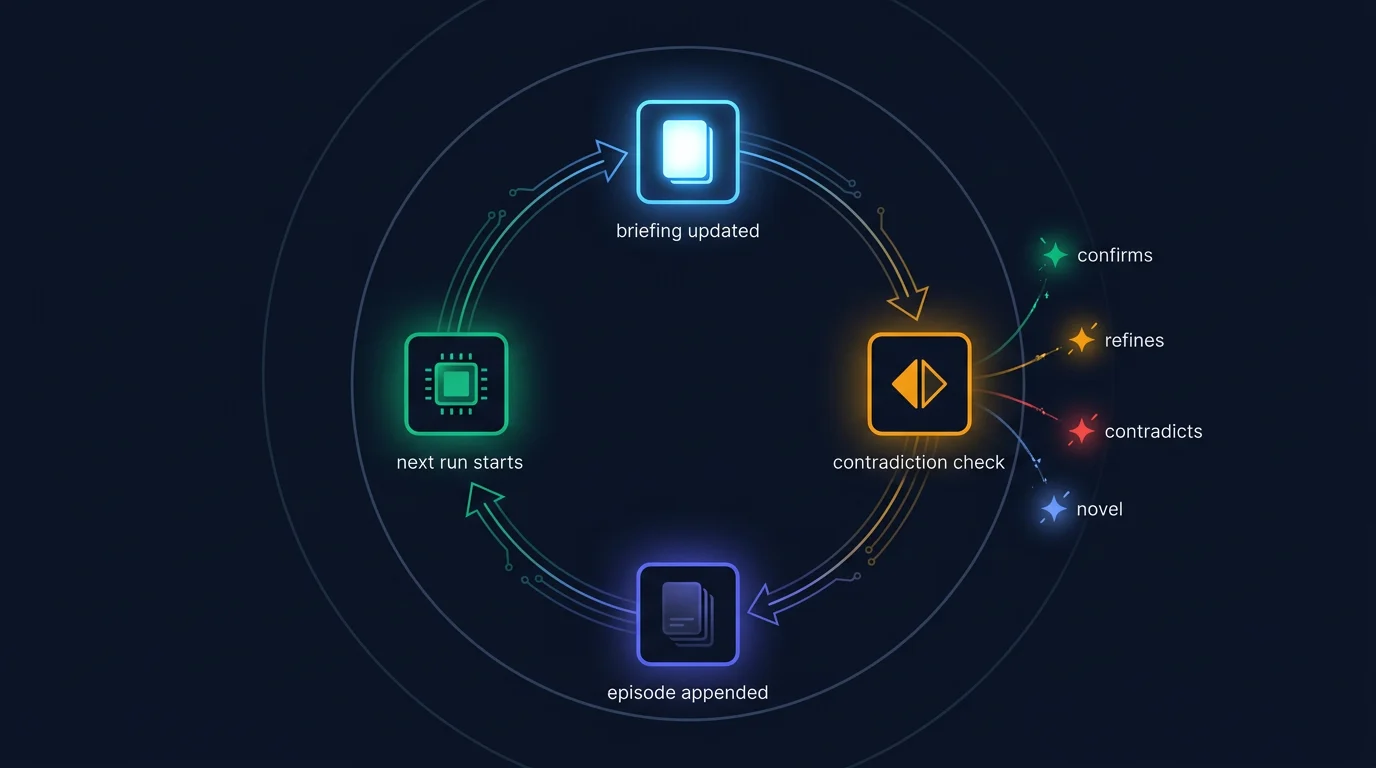 Each revolution leaves the briefing slightly better informed.
A task finishes and an episode is appended to the archive: what was tried, what happened, what evidence exists. A contradiction check runs immediately against the briefing and compares the new episode to the insights whose tags overlap it. The outcome is one of four: the episode confirms an existing insight, refines it, contradicts it, or describes something new. Confirmed insights gain evidence and may be promoted. Refined ones are updated. Contradicted ones are revoked, with the reason logged. New ones enter as tentative.
| Confirms | The insight gains evidence, and a tentative entry may be promoted |
| Refines | The insight text is updated with the new evidence |
| Contradicts | The insight is revoked, with the reason logged |
| Novel | A new insight enters as tentative |
At the end of a run, a reflection step reviews the archive in batch: tentative insights that a second task confirmed become active, insights that newer evidence contradicted are revoked, and the briefing is brought up to date. The next run starts from a briefing that is measurably better informed than the one the previous run started from.
Two properties make this a learning system rather than a storage system. The cadence is event-driven, not scheduled: a contradiction is acted on the moment the evidence lands, because a scheduled review that runs every ten tasks misses the time-critical contradiction in between. And the loop runs between runs, not within them. The agent does not become smarter mid-task. It becomes smarter for the next task, which is where the improvement compounds.
This is the pattern the research keeps arriving at from different directions. Reflexion showed that verbal reflection on failures, stored and replayed, improves later attempts without touching model weights. The surveys that map the field describe the same evolution: systems move from preserving trajectories to reflecting on them to abstracting them into reusable experience. The learning loop is the mechanism that connects those stages.
The quality gate
An episode becomes an insight only if it earns the right. Four entry classes cover what earns it.
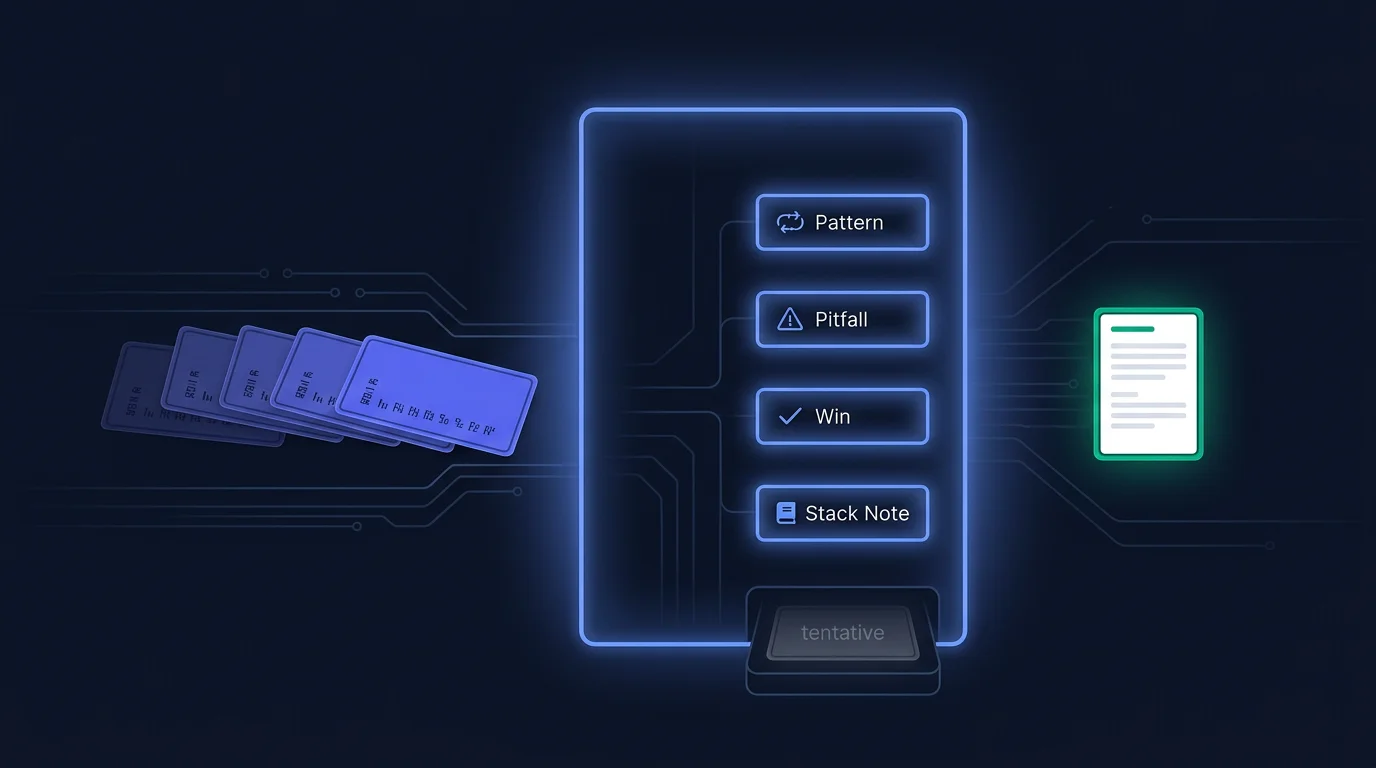 Four entry classes decide what earns a place in the briefing.
- A pattern recurs across tasks, and the evidence is that it held more than once.
- A pitfall is a failure that can repeat: an approach that failed for a structural reason rather than a one-off environment issue.
- A win is an approach that worked and transfers to similar problems.
- A stack note is a gotcha inherent to the tool, true for anyone using it, discovered by us.
Single-incident observations enter as tentative and stay flagged. A second task either confirms them, in which case they are promoted, or contradicts them, in which case they are revoked. The gate exists because the cost of a false positive is asymmetric: one failed attempt does not warrant a blanket prohibition, and an agent that refuses to try an approach because one episode went wrong is acting on superstition. A missed insight costs a slower next task. A false belief costs every task after it.
Revocation, not deletion
A contradiction is resolved by revocation, not deletion.
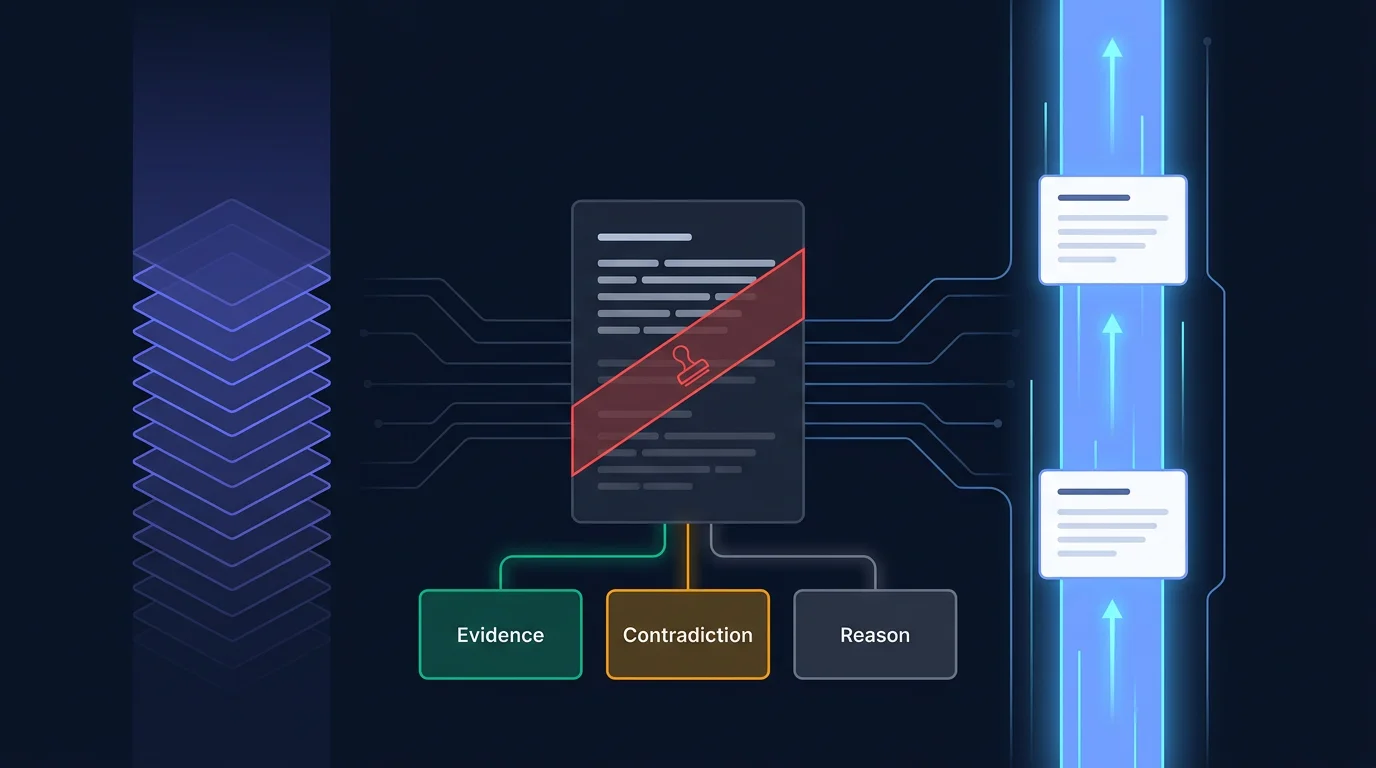 A contradicted belief keeps its evidence and its reason. The revoked insight stays in the briefing file, marked with the original evidence, the contradicting evidence, and the reason. It is excluded from recall, so it stops governing behavior. It is not destroyed, because the chain matters more than the current state.
The argument is the same one that governs an audit trail. A decision record that gets overwritten when the decision turns out wrong is not a record, it is a memory that flatters the present. The revocation chain explains why a belief was held and why it was abandoned, which is exactly the question an auditor asks and exactly the question a future maintainer asks when a similar approach comes up again. Memory that can only remember the current truth is memory that cannot explain itself.
Memory as governance
The pre-action check is where memory stops being storage and becomes a control. Before an approach runs, it is matched against the known pitfalls in the briefing. If it matches, the agent is shown the prior failure evidence and must proceed in full knowledge of it.
This is a boundary on what the agent may attempt, enforced with evidence, and with the ability to revoke the belief that let the approach through.
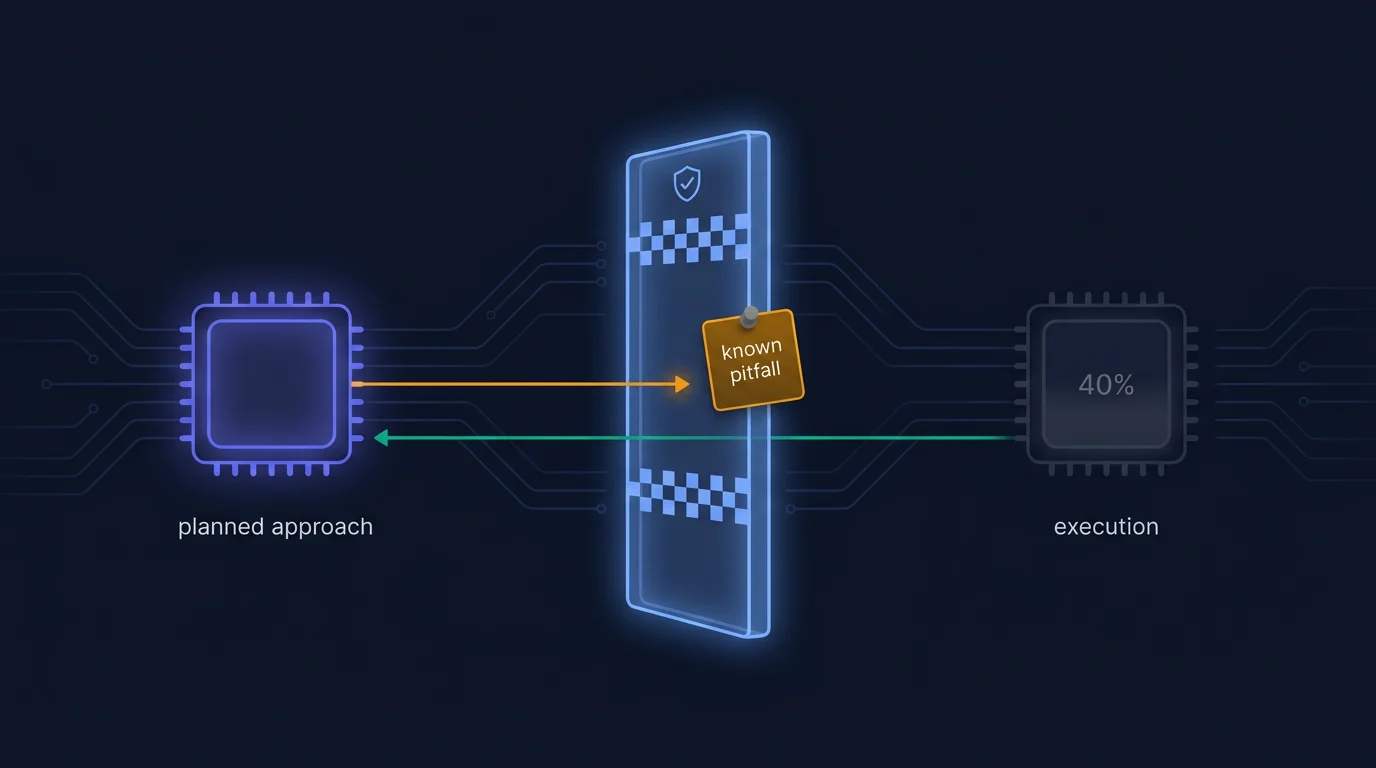 A logged failure becomes a warning before the approach repeats. Those are the same three properties governed AI is built on: an authority boundary, a record of each decision, and revocation. Memory, done this way, is not a bolt-on convenience for a smarter agent. It is part of the governance layer that makes the agent safe to run unattended.
Where it breaks
Four failure modes cover most of what goes wrong.
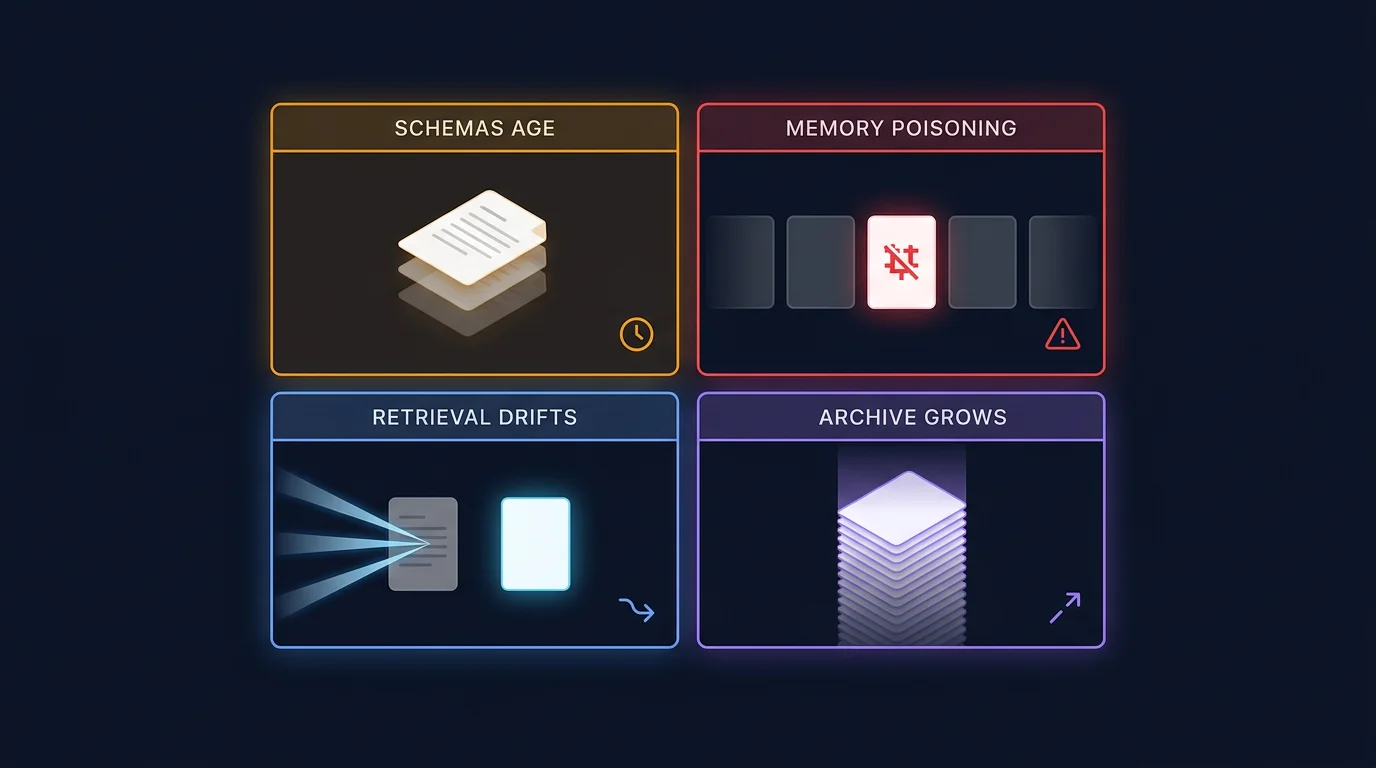 Four failure modes: aging schemas, memory poisoning, retrieval drift, and an archive that never stops growing.
-
Memory schemas age. The format the episodes were written in, the tags the insights carry, the model the briefing was tuned for, all of it moves while the memory stays still. A layer that does not version its own format ends up reading an archive it can no longer interpret.
-
memory poisoning. A corrupted entry steers every future decision silently, because the agent trusts its briefing the way it trusts its instructions. The append-only archive and the deterministic projection are the mitigations: the material that explains a conclusion cannot be edited after the fact, and the briefing cannot be rewritten by the model that reads it.
-
Retrieval drifts. A tag set that matched the early tasks stops matching the later ones, and the same stale entries keep surfacing while the relevant ones go unread. The fix is the same as any evolving index: the tags are maintained as part of the learning loop, not once at setup.
-
The archive grows without bound. An append-only log is honest and unbounded, and a single-project agent can absorb that cost for a long time. When it stops being free, the answer is archival, moving old episodes to cold storage, never deletion.
None of these failure modes are fatal on their own. All four are fatal if the layer is invisible, which is why the memory layer has its own operational log: every recall, every contradiction check, every promotion and revocation recorded in plain text, so the memory system can be audited the way the agent’s work is audited.
The design stances, collected
The decisions above reduce to a short list, and each one carries a trade-off that was accepted deliberately.
The archive is append-only and the briefing is curated, and the raw archive never enters context. Contradictions are resolved by revocation, not deletion. Insights pass a quality gate and start tentative. The cadence is event-driven, not scheduled. The format is plain text and the recall is deterministic. Memory is kept separate from task management and from the audit trail, because what to do, what was done, and what was learned are three different records that get conflated at their own cost.
A memory layer built this way does not make an agent dramatically smarter on any single task. It makes the agent stop making the mistakes it has already made, which is the improvement that compounds.
How we approach this at Flytebit
The layer we build into production agents is plain text, local-first, and deterministic. The archive is a JSONL event log. The briefing is a markdown file. Recall is a script that filters the briefing by tags, not a vector search and not an LLM call. The summary the agent reads is a pure projection of the briefing, which means it is reproducible, diffable, and reviewable, and it cannot be silently rewritten by the model that reads it.
We accept the trade-offs. Tag-based recall is less precise than semantic search, and the tags have to be maintained. What we get back is a memory layer where every entry has a provenance, every change is visible in version control, and nothing depends on a service that could disappear. The same discipline shows in how we build: DOCKR regenerates its output from the repository on every commit, because a doc is a projection of the code and projections get rebuilt, not trusted. The agents we ship for clients carry a briefing rather than a history dump, and they do not repeat the failure they recorded last week.
Memory, in our builds, is not a feature that makes the agent cleverer. It is a control that makes the agent safer, and the difference is visible in the failure modes.
Key takeaways
- ✅ Memory needs a read path. An audit log records what happened; without a way to use it, the agent repeats the failure it recorded.
- ✅ Five types with separate lives. Working, episodic, semantic, procedural, and prospective memory each have a different owner, lifetime, and failure mode.
- ✅ Raw memory hurts. Uncurated trajectories degrade agent performance; only the briefing enters context.
- ✅ The loop is the learning. Event-driven contradiction checks and run-end reflection are what make memory accumulate.
- ✅ Revocation preserves the chain. A contradicted belief loses authority but keeps its evidence and the reason it was abandoned.
- ✅ Memory is governance. A pre-action check turns a logged failure into a boundary on what the agent may attempt.
Working With Flytebit
At FLYTEBIT TECHNOLOGIES, we build the memory layer into the agents we ship, and the pattern above is the one we run, trade-offs included. If you are deciding whether your workflow needs one at all, we start with a feasibility study from $2K, and the two to four weeks it takes are usually enough to know.
Ready to get started?
- Visit us at: FLYTEBIT TECHNOLOGIES
- Follow FLYTEBIT TECHNOLOGIES on LinkedIn
Related Reading
Start with the loop:
👉 Feedback Loops in Agentic AI Systems
The loop is what makes memory learning: how agents learn from every execution, and why the feedback signal has to be structured to survive.
See the operational side:
👉 Operating Agentic AI Systems
What running agents in production teaches: the schemas that age, the drift that accumulates, and the maintenance cadence a memory layer has to survive.
Understand the governance tie:
👉 Governance for Agentic AI Systems
Why enforcement outside the model is the same idea as memory outside the prompt: controls that do not depend on the model’s cooperation.
Frequently Asked Questions
What is the difference between agent memory and RAG?
RAG retrieves chunks from a fixed corpus at query time. Agent memory is state that the agent itself accumulates, updates, and revokes across runs. A document corpus does not change because the agent learned something. Memory does. The two serve different problems: RAG answers 'what does the source say', and memory answers 'what do we know from what we have done'.
Does an agent need a vector database to remember?
No. The memory layer we build uses plain text: an append-only archive of episodes and a curated briefing, with deterministic tag-based recall. A code projection beats a vector search for the agents that do the work, because the model reads the briefing as text either way. Vector search adds recall precision you often do not need, and it hides the evidence trail that plain text keeps readable.
How much memory should enter the agent's context?
Only the briefing, and only the entries relevant to the current task. The archive never enters context. A filtered projection of five to fifteen curated insights beats a history dump, and the research on injecting raw trajectories into software engineering agents found performance dropped rather than improved.
What happens when an agent remembers something wrong?
The next episode that contradicts it revokes the belief. Revocation keeps the original evidence, the contradicting evidence, and the reason, then excludes the entry from future briefings. The insight is not deleted because the chain that explains why a belief was held and abandoned is more useful than the current state alone.
Is memory a security surface?
Yes. A poisoned memory entry steers every future decision silently, because the agent trusts its briefing the way it trusts its instructions. Memory has to be treated as an input that can be corrupted, which is why the archive is append-only and the briefing is a deterministic projection rather than something the model writes.
How is memory related to AI governance?
The pre-action check in our memory layer matches a planned approach against known pitfalls and surfaces the prior failure evidence before the approach runs. That is governance: a boundary on what the agent may attempt, evidence for the decision, and the ability to revoke a belief. Authority boundaries, evidence, and revocation are the same three properties governed AI is built on.

Ready to Transform Your Business with AI?
Let's discuss how Agentic AI and intelligent automation can help you achieve your goals.